Timed to Perfection: How Political Campaigns Learned to Speak in Clips
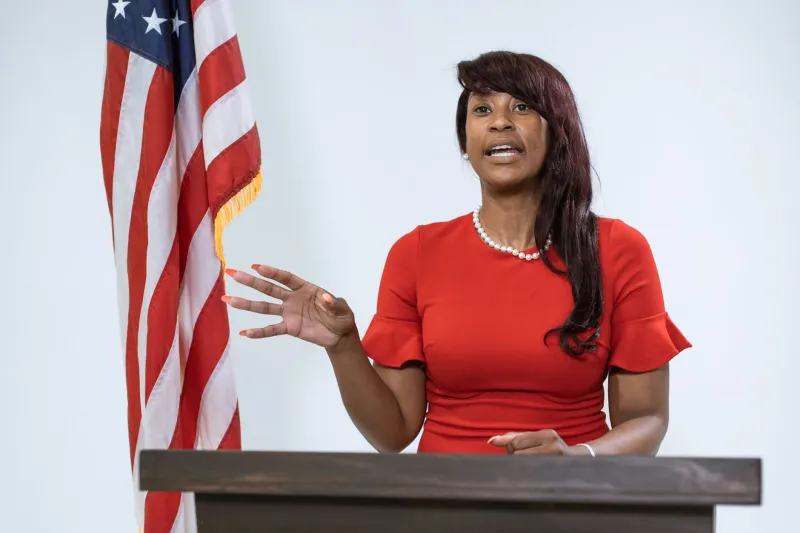
Somewhere in a campaign war room, a communications director is watching a stopwatch. Not because a debate is starting, not because an ad buy is expiring — but because a candidate is about to deliver a line that needs to land in under a minute. Preferably under 46 seconds. Ideally in a format that plays clean on a phone screen with the sound off.
Welcome to modern political messaging, where the speech is almost beside the point. The clip is the whole game.
The Architecture of the Viral Political Moment
It didn't start with TikTok. It didn't even start with Twitter. Political strategists have chased the perfect soundbite since at least the Reagan era — but something fundamentally shifted when short-form video platforms rewired how Americans consume information. The old 30-second TV spot was built around paid placement. Today's equivalent gets shared for free, millions of times, because it's engineered to feel spontaneous.
Campaigns now employ what insiders sometimes call "clip architects" — staffers or consultants whose specific job is reverse-engineering statements for virality. They work backward from the platform. What does a shareable TikTok clip look like? What makes something loop-worthy on Instagram Reels? What hits hard in the first three seconds before someone scrolls away?
The answers shape what a candidate actually says at a rally, in a committee hearing, or during a press gaggle. The "authentic moment" you see on your feed was often drafted, rehearsed, and stress-tested before the cameras were ever turned on.
The 2024 Playbook in Action
Look at how the 2024 election cycle unfolded through the lens of clip strategy. Several high-profile Senate races saw candidates deliver lines that seemed almost suspiciously quotable — punchy, self-contained, emotionally charged in exactly the right measure. These weren't accidents.
One communications veteran who worked on a competitive Senate campaign (and asked not to be named) put it bluntly: "We had a rule. If you can't say it in 45 seconds and have it make sense with no context, don't say it at a press event. Save it for a prepared speech where it won't travel."
That 45-second ceiling isn't arbitrary. It maps almost perfectly to the sweet spot for cross-platform shareability — long enough to feel substantive, short enough to hold attention. It's also, not coincidentally, about how long a clip can run before most platforms either truncate it or force a tap-to-expand.
The results have been striking. Clips from town halls, committee hearings, and campaign trail stops routinely rack up millions of views not because a news network promoted them, but because they were pre-built for organic spread. A candidate "going off" on a colleague in a hearing. A one-liner that skewers an opponent. A moment of apparent vulnerability that resolves into defiance. These arcs are compressed, yes — but they're also constructed.
How the Media Became the Distributor
Here's the part that makes media critics uncomfortable: mainstream outlets are doing a lot of the distribution work for free. When a clip gets enough traction on social platforms, cable news picks it up, which drives more social sharing, which drives more cable coverage. It's a feedback loop that campaigns understand and exploit.
A producer at a national cable network — again, not named — acknowledged the dynamic: "We know when we're being fed something. But if it's newsworthy and it's what people are already watching, we're going to cover it. That's our job. The fact that it was engineered doesn't make it not news."
That logic isn't wrong, exactly. But it does mean that a campaign with a sharp clip strategy can effectively set the news agenda without buying a single ad. The media becomes an amplifier for content that was purpose-built to be amplified.
Democratizing the Message — or Gaming the Room?
There's a version of this story that's actually kind of optimistic. Short-form clip culture has lowered the barrier to entry for political messaging. A city council candidate with no ad budget can go viral with a sharp 40-second statement. Independent voices that would never get a prime-time slot can find massive audiences through organic sharing. The clip format, in theory, levels the playing field.
But there's a darker read, too. When political communication is optimized for virality rather than substance, the incentives get warped fast. Nuance doesn't clip well. Complex policy doesn't go viral. What travels is outrage, contrast, and emotional punch — which means campaigns are increasingly rewarded for producing content that provokes rather than informs.
Media literacy researchers have started flagging this explicitly. The problem isn't just that clips can be taken out of context (though they can, and are). It's that some clips are designed to be the context — to tell a complete emotional story in under a minute, with no room for the messier reality that surrounds them.
Every Second Is a Choice
At 8m46s, we think about time a lot. Eight minutes and 46 seconds is enough to change everything — we've seen that play out in the culture over and over. But 46 seconds? That's apparently enough to shape how millions of Americans think about a candidate, a policy, or a moment in history.
The clip isn't going away. The attention economy isn't going away. What might help is knowing — really knowing — that the "spontaneous" moment you just shared was probably drafted by a communications team that understood exactly how your brain works and exactly how long they had to work with it.
Watch the clip. Share it if you want. But maybe take one extra second before you do.