Same Old Clip, Brand New Lie: The Underground Economy of Recycled Viral Content
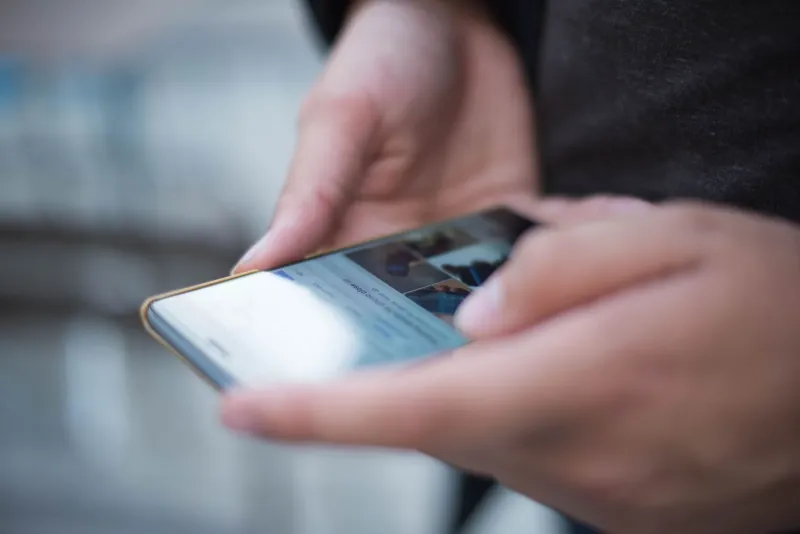
Somewhere in your feed right now, there's a clip you've probably already seen. Maybe you watched it in 2019. Maybe it made you laugh, or cry, or sent you down a rabbit hole for twenty minutes. But today it's back — stripped of its original context, dressed up with a fresh caption, and performing like it just dropped this morning.
Welcome to the resurrection game, where nothing ever really dies and everything is always, technically, "new."
The Factory Floor Nobody Talks About
Here's how it usually goes. A creator — or more often, an aggregator account with 2 million followers and zero original content — digs through the archives. Could be old Reddit compilations, forgotten YouTube uploads, or clips from Vine that technically never existed anymore. They download, they crop, they slap a trending audio track underneath, and they post. No timestamp. No credit. Just a caption engineered to make it feel urgent and current.
The result? Hundreds of thousands of views on a moment that already had its fifteen minutes of fame half a decade ago.
This isn't some fringe behavior. It's a fully systematized content strategy. There are accounts built entirely on this model — some of them pulling in serious ad revenue and brand deals without ever producing a single original second of footage. Every clip they post is borrowed, repurposed, and reframed. And the algorithm rewards them just the same.
Why the Algorithm Doesn't Care How Old It Is
The brutal truth about platforms like TikTok, Instagram Reels, and YouTube Shorts is that their recommendation engines are optimized for engagement, not authenticity. If a recycled clip from a 2017 wedding fail generates the same watch time and comment volume as something filmed last Tuesday, the system treats them identically.
In fact, older viral content sometimes performs better when repackaged. The emotional hooks are already proven. The punchline lands because it was engineered by time and collective memory to land. A creator recycling a clip isn't gambling — they're playing with a stacked deck.
Platforms have made some noise about combating this, but the enforcement is inconsistent at best. Copyright claims occasionally catch reposts of major media content, but a random clip of somebody's dog doing something weird in 2018? That's basically in the public domain of the internet's collective unconscious. Nobody's filing DMCA notices over it.
The Nostalgia Loophole
There's a version of this that's at least somewhat honest: the throwback account. "Vintage internet moments," "clips that broke the internet," "remember this?" — these formats signal upfront that you're about to watch something old. They're leaning into the nostalgia angle, and audiences generally know what they're signing up for.
The problem is that line between "nostalgic curation" and "deliberate misdirection" has gotten blurry to the point of near-invisibility. A caption that says "this is still the funniest thing on the internet" gives no indication of when "this" actually happened. A trending audio overlay actively works against the viewer's ability to place the clip in time. The framing implies recency even when it's technically not lying outright.
It's the difference between a rerun and a rerun that airs without telling you it's a rerun. One is nostalgia. The other is something else.
The Viewers Who Know — and Scroll Anyway
Here's the uncomfortable part: a lot of people don't actually care.
Scroll through the comments on any recycled viral clip and you'll find a split crowd. Half the commenters are calling it out — "this is from 2016," "y'all keep reposting this," "I've seen this a hundred times." The other half are laughing and tagging their friends like it's completely fresh. Both groups are generating engagement. Both groups are feeding the machine.
There's something almost philosophical about it. In an infinite scroll environment, does it matter when something happened? If a clip makes you laugh at 11 p.m. on a Thursday, does its original upload date change the experience? For a lot of casual viewers, the honest answer is no. The moment exists in the feed. The moment is real. That's enough.
But that attitude creates real problems for people who actually care about context — journalists, researchers, and anyone trying to figure out whether a clip they're watching reflects something happening right now or something that happened during a different presidential administration.
When Recycling Becomes Dangerous
Most recycled content is harmless. An old cat video doesn't hurt anyone. But the same mechanics that work for funny clips also work for misleading ones.
Old protest footage gets recirculated during new protests to suggest ongoing unrest. Clips from foreign countries get reframed as American events. Moments from years-old news stories get stripped of their timestamps and reposted as breaking news. The recycling infrastructure built for entertainment has a dark twin that operates in the misinformation space — and they use identical tools.
This is where the stakes actually matter. A fake-fresh clip about a celebrity saying something controversial can spread for days before anyone traces it back to its real origin. By then, the damage is done. The correction never catches the original post.
Who's Accountable for Any of This?
Honestly? Nobody, really — and that's the answer the industry has quietly settled on.
Platforms technically prohibit misleading content, but recycled clips rarely trigger those policies unless they're attached to something explicitly dangerous. Creators face no formal penalty for stripping timestamps and reposting. Viewers have no reliable tool built into their feeds to surface when a clip was originally recorded versus when it was uploaded.
Some third-party fact-checking organizations do clip verification work, and a handful of browser extensions exist to help power users trace video origins. But none of that is frictionless, and frictionless is the whole point of short-form content. Nobody's opening a new tab to verify a dog video.
Every Second Gets Reused
At 8m46s, we spend a lot of time thinking about what makes a clip matter — why certain moments stick, why some seconds feel irreplaceable. The recycling economy kind of flips that idea on its head. It suggests that the same seconds can matter multiple times, to different audiences, in different eras, under different captions.
Maybe that's weirdly beautiful. Maybe it's just a scam. Probably it's both.
What's clear is that the next time a clip stops you mid-scroll and makes you feel something, it's worth asking one quick question before you share it: When did this actually happen? The answer might not change how you feel about the clip. But it'll tell you something real about the feed you're swimming in — and the invisible hands doing the repackaging.