Nothing to Say, Everything to Gain: Why the Smartest Creators Are Letting the Silence Do the Talking
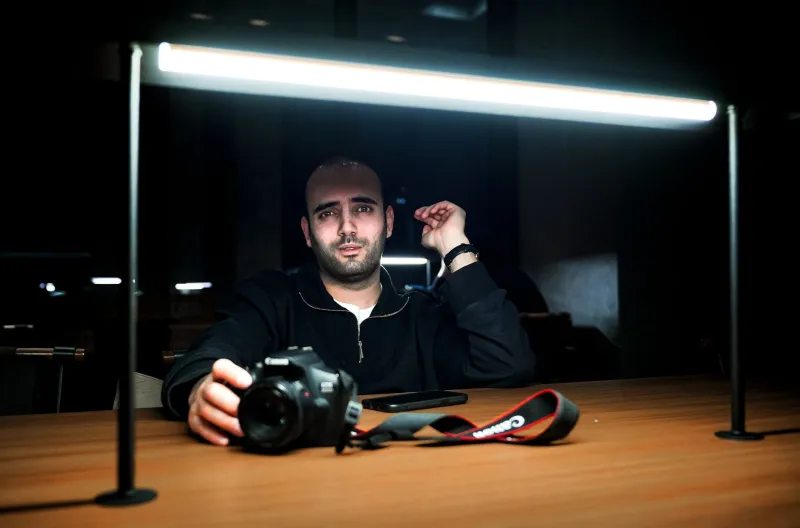
You're scrolling. You've been scrolling for the last twenty minutes, probably. Everything is loud. Everything is fast. Every video is fighting for the same three seconds of your attention before your thumb instinctively twitches upward. And then — nothing. A creator just sits there. Staring. Maybe five seconds pass. Maybe seven. You stop scrolling.
That pause? That's not a mistake. That's a weapon.
Across TikTok, YouTube Shorts, and Instagram Reels, a counterintuitive movement is gaining serious traction. Creators are intentionally building silence into their content — not because they've run out of things to say, but because they've figured out that in a landscape engineered for constant stimulation, a well-placed moment of nothing hits harder than anything else you can throw at an algorithm.
The Loudness War, Except for Video
If you know anything about the music industry's "loudness war" — the decades-long arms race where producers kept cranking up volume to make tracks pop on the radio — you already understand the problem creators are facing right now. When everything is loud, loud stops meaning anything. When every video is edited to within an inch of its life, packed with B-roll, trending sounds, and rapid-fire cuts, the whole feed starts to blur into one undifferentiated wall of content.
Creators noticed this before the platforms did. And a handful of them started experimenting with something that felt almost reckless: slowing down. Going quiet. Letting a moment breathe until it became genuinely uncomfortable.
The results were hard to argue with.
"I posted a video where I literally just looked at the camera for eight seconds before saying a word," says Marcus T., a lifestyle creator based out of Atlanta with around 340,000 followers. "My editor thought I'd lost it. But the watch time on that video was double anything I'd done in months. People stayed because they were waiting for something. And while they were waiting, they were locked in."
Why Your Brain Can't Look Away
There's actual neuroscience behind this. The human brain is a prediction machine — it's constantly running simulations of what's about to happen next. When a video gives you everything you expect, your brain barely registers it. You've already moved on mentally before the clip even ends.
But silence? Silence is a violation of expectation. It triggers what researchers sometimes call an "orienting response" — a hardwired neurological alarm that essentially says something unusual is happening, pay attention. It's the same reflex that makes you look up from your phone when a room suddenly goes quiet.
In a short-form content environment, where the average viewer makes a keep-or-skip decision within the first two seconds, triggering that orienting response is basically the holy grail. And silence does it reliably, cheaply, and without requiring a production budget.
The 46-Second Sweet Spot
Here's where it gets interesting for creators who think carefully about timing — and at 8m46s, we're always thinking about timing. Creators experimenting with silence aren't randomly dropping dead air into their videos. The pauses tend to cluster in a very specific place: right around the 40 to 50-second mark.
That's not an accident. On most short-form platforms, that window represents a critical threshold. It's long enough that a viewer who's made it there has already demonstrated real interest. It's also the point where algorithmic signals — watch time, replays, shares — start to carry serious weight in determining whether a video gets pushed wider.
A silence dropped right there acts like a reset button. It re-engages a viewer who might be drifting. It creates a micro-moment of suspense. And it tells the algorithm that people aren't bouncing.
"I think of it like a speed bump," explains Jordan Lee, a creator from Chicago who makes what she describes as 'slow content' — deliberately unhurried videos about everyday life that have earned her a fiercely loyal audience of just over 200,000 across platforms. "A speed bump doesn't stop you. It just makes you slow down and actually look at where you are."
Not Everyone Can Pull It Off
Let's be honest: silence is a high-risk play. For every creator who's used it to stop a scroll cold, there are plenty who've just lost viewers to the next video. The difference tends to come down to one thing — trust.
Silence only works when an audience already has some baseline belief that you're worth waiting for. A creator with zero established presence dropping eight seconds of dead air at the top of a video is just... a bad video. But a creator who's built even a small community of people who feel genuinely connected to them? That pause reads as intentional. It reads as confidence. It reads as something is coming.
That dynamic has led some creators to think of silence less as a production technique and more as a relationship tool. The willingness to be quiet on camera — to resist the urge to fill every second with content — signals authenticity in a medium that's drowning in performance.
"Anyone can edit fast," Marcus says. "It takes a certain kind of confidence to just sit with the camera. And I think people recognize that confidence, even if they can't name it."
What the Platforms Actually Think
Platform algorithms are notoriously opaque, but the data that creators are sharing publicly tells a consistent story. Videos with deliberate pacing — including strategic pauses — tend to generate stronger completion rates and higher replay numbers than comparably-lengthed videos that maintain constant motion and audio.
That matters because completion rate is one of the most heavily weighted signals on virtually every major short-form platform. A video that gets watched all the way through by 60% of viewers will almost always outperform a video that gets watched halfway through by 90% — even though the second video reached more people initially.
Silence, in other words, isn't just an aesthetic choice anymore. It's an algorithmic one.
The Bigger Picture
There's something almost poetic about where this trend is landing. Short-form video was supposed to be the format that finally killed patience — the endpoint of a decade-long compression of human attention spans. And yet here we are, watching creators deliberately slow things down and finding that audiences, exhausted by the noise, are genuinely relieved.
Maybe the attention economy isn't quite as broken as everyone thought. Maybe people don't actually want to be assaulted by content every second of every scroll. Maybe sometimes they just want a creator to look at them, say nothing, and let the moment sit.
Every second counts. We've always believed that here. But it turns out some of the most valuable seconds are the ones where absolutely nothing happens.