The 72-Hour Clock: How Celebrities and Brands Live or Die by Their Response Window

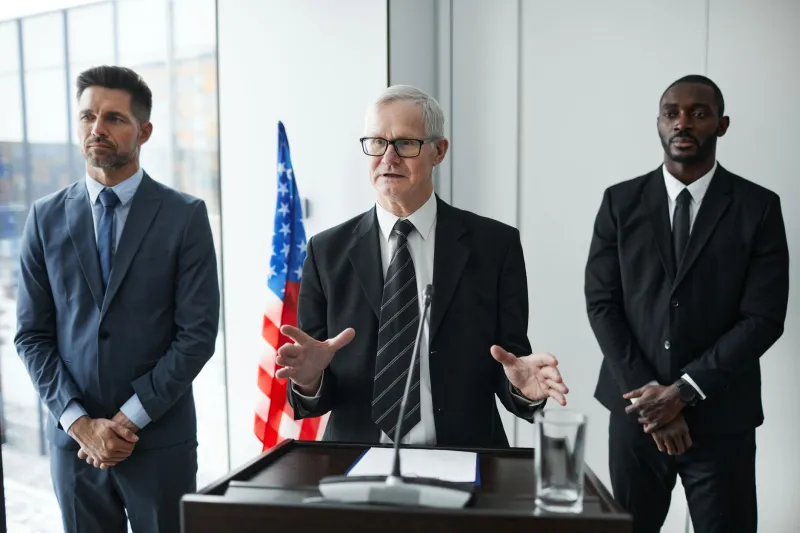
Photo: W.carter , CC BY-SA 4.0, via Wikimedia Commons
Somewhere between the moment a damaging clip goes live and the point where the discourse hardens into something permanent, there's a window. It's not a wide one. Depending on how fast a story accelerates, you might have 48 hours. You might have 72. What you almost certainly don't have is a week.
Welcome to the new math of digital reputation — where seconds matter at the clip level, but entire careers are decided by what happens in the three days after everything goes sideways.
The Algorithm Has a Forgiveness Schedule (Sort Of)
Here's the uncomfortable truth that PR firms are increasingly building their entire playbooks around: platforms like TikTok, Instagram, and X don't hold grudges the way humans do. Their feeds move fast, their trending cycles burn hot and short, and their users are perpetually distracted by the next thing. That's actually good news — but only if you know how to use it.
The rough framework that crisis consultants keep landing on goes something like this: the first 6 hours are pure chaos. The story is spreading, screenshots are being made, quote-tweets are piling up. Nothing you say in this window will be heard clearly because everyone's too busy sharing. Hours 6 through 24 are when the mainstream outlets pick it up and the narrative starts to calcify. Hours 24 through 48 are the danger zone — this is when late-night hosts write their jokes, when think-pieces start getting filed, when the clip gets a caption that sticks. And by hour 72, if you haven't moved the story, the story has moved on without you.
After that? You're not fighting the clip anymore. You're fighting the summary of the clip — the version that's been memed, dunked on, and compressed into a cultural shorthand that's way harder to shake.
The Silence Trap
One of the most consistent mistakes public figures make is confusing strategic silence with buying time. They're not the same thing.
Strategic silence means you're quiet because your team is actively building a response, gathering context, and timing a counter-narrative. Buying time usually just means you're hoping it goes away — and it almost never does. The algorithm might move on, but the people who already saw the clip don't forget. They just wait.
Think about how many public figures have tried the "let it breathe" approach only to find that the absence of a response became the story. In a media environment where a non-answer gets screenshotted and dissected just as aggressively as an actual statement, silence isn't neutral. It's a choice with consequences.
The celebrities and brands that have navigated viral disasters most effectively in recent years tend to share one trait: they responded with something — anything substantive — within that first 48-hour window, even if it was just an acknowledgment that more was coming. Buying 24 hours of goodwill by saying "we hear you and we're taking this seriously" is infinitely more valuable than going dark for five days and then dropping a Notes app apology that nobody asked for anymore.
When Fast Beats Perfect
There's an old PR instinct that says you should never respond until you have the full picture. That instinct was built for a slower media cycle — one where a story might take three days to reach critical mass. That world is gone.
In the current environment, the rough-but-timely response almost always outperforms the polished-but-late one. Not because audiences don't care about quality, but because a fast response signals awareness, and awareness signals accountability. People aren't necessarily looking for a perfect explanation. They're looking for proof that the person on the other end of the clip is a human being who understands what just happened.
This is why some of the most effective crisis recoveries in recent memory have come from celebrities who got on camera quickly — imperfectly lit, slightly flustered, clearly not media-trained into oblivion — and just talked. The rawness read as real. Real reads as remorseful. Remorseful is something audiences can work with.
Contrast that with the brands and public figures who go into full lockdown mode, brief their lawyers before their communications team, and emerge four days later with a statement so hedged and sanitized it could've been written by a legal disclaimer generator. By that point, the audience has already decided how they feel. The statement just confirms their suspicions.
The 72-Hour Case Studies
Without naming names in a way that turns this into a pile-on, the pattern holds up across categories. Musicians, athletes, reality TV personalities, consumer brands — the ones who came back from genuinely damaging moments tended to act within the window. The ones who became cautionary tales tended to wait.
What's particularly interesting is how the type of response matters almost as much as the timing. A response that tries to reframe the clip — to say "here's what was actually happening" — tends to work when there's genuinely missing context. But when the clip is pretty self-explanatory? That reframe strategy backfires hard. Audiences who've already watched the clip don't want to be told they misunderstood it. They want to see the person reckon with what they saw.
The most durable recoveries tend to follow a simple structure: acknowledge the clip exists and that people are upset, take some form of ownership (even partial), and give people something new to look at. That last part is crucial. You can't just respond to the bad clip — you have to start generating new content that gives the algorithm something else to surface when your name gets searched.
The Clock Is Already Running
What makes the 72-hour window so unforgiving is that it starts whether you're ready or not. The clip doesn't wait for you to finish a meeting or get off a flight or consult with your management team. It's already out there, already being shared, already being assigned a meaning by thousands of people who will never hear your side unless you give it to them in time.
For anyone operating in a space where public perception matters — and in 2024, that's pretty much everyone with a platform — the lesson is the same one that every short-form creator already knows instinctively: you don't get to control the moment, but you can control what happens in the seconds after it.
Every second counts. Especially the ones right after everything goes wrong.